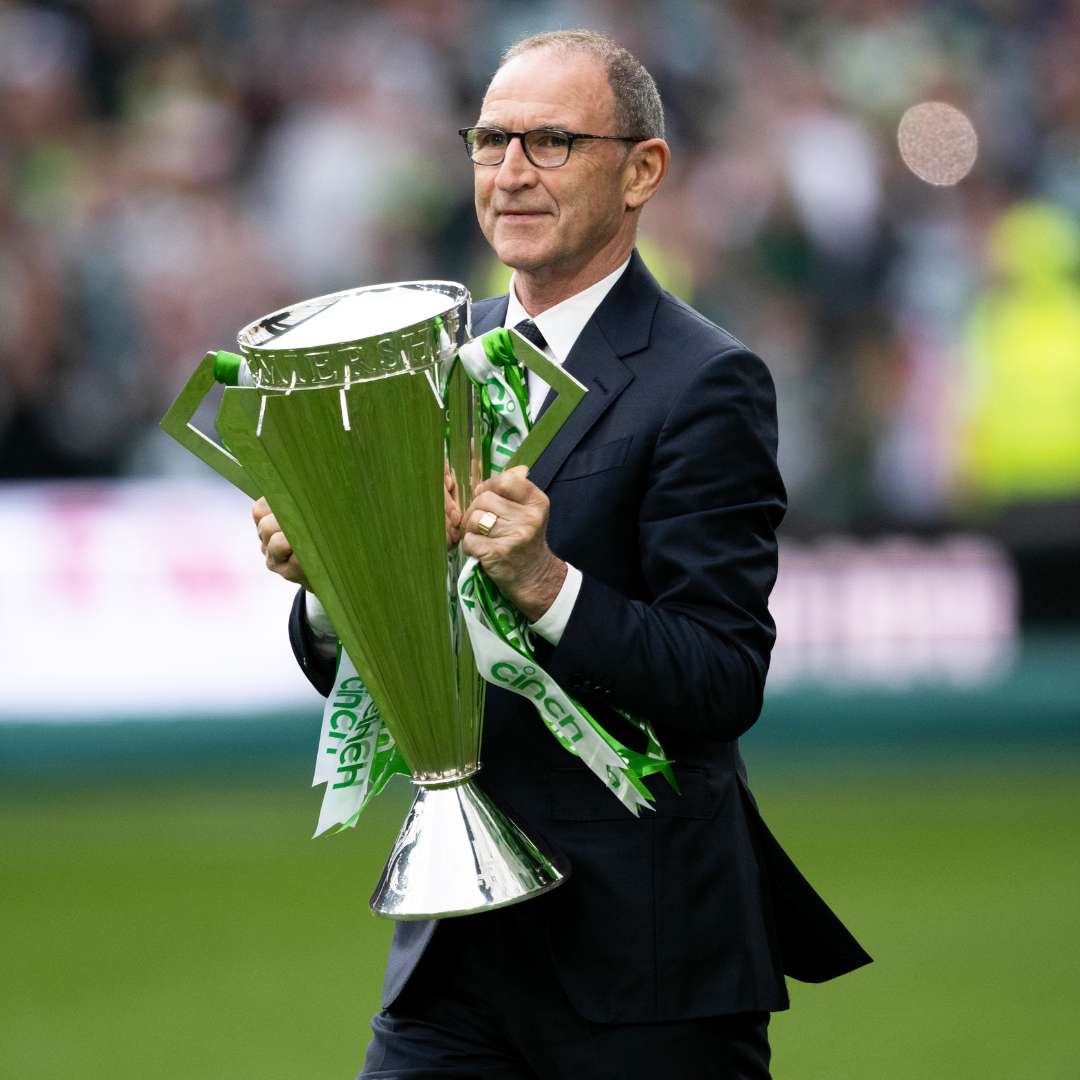
Martin O’Neill has built a remarkable career in football, first as a talented midfielder and later as one of the most respected managers in British and Irish football. From European Cup glory with Nottingham Forest to memorable trophy-winning spells at Celtic and Leicester City, his career has been defined by determination, personality, and an ability to inspire teams.
In 2026, O’Neill remains a major name in the game. After returning to Celtic during a turbulent period, he helped the club win the Scottish Premiership and Scottish Cup before being appointed permanent manager on a one-year contract with an option for another year.
Early Life and Playing Career
Born on March 1, 1952, in Kilrea, Northern Ireland, Martin Hugh Michael O’Neill developed his footballing ability during a period when Gaelic games were also an important part of sporting life in Ireland.
He eventually moved into association football and began his professional playing career in Northern Ireland before moving to England. His career took a significant turn when he joined Nottingham Forest under the management of Brian Clough.
O’Neill became an important part of a Forest side that enjoyed extraordinary success during the late 1970s and early 1980s. He helped the club win the First Division title in the 1977–78 season and played in Forest’s European Cup triumphs in 1979 and 1980.
His performances also earned him a significant international career with Northern Ireland. O’Neill won 64 international caps and represented his country at the 1982 FIFA World Cup, where Northern Ireland made an impressive run in Spain.
From Player to Manager
After ending his playing career, O’Neill gradually established himself as a manager. His early coaching work included Grantham Town and Wycombe Wanderers, where he began demonstrating the leadership qualities that would later become central to his reputation.
His time at Wycombe was particularly important because it gave him the opportunity to prove that his managerial ability extended beyond the dressing room. He eventually moved to Norwich City before taking charge of Leicester City in the mid-1990s.
Leicester became one of the defining chapters of his early managerial career. O’Neill guided the club to three League Cup finals and won the competition twice. His Leicester teams were competitive, disciplined, and capable of challenging clubs with considerably greater resources.
That success established him as one of the most promising British managers of his generation.
Celtic and a Golden Era
The biggest transformation in O’Neill’s managerial reputation came when he took charge of Celtic in 2000.
His arrival immediately changed the atmosphere around the Glasgow club. In his first season, Celtic won the domestic treble, becoming the first Celtic team in more than three decades to achieve the feat. The club’s official history describes his first spell as one of the most influential managerial periods in its modern era.
O’Neill continued to deliver major domestic success during his five-year tenure. Celtic won three league championships, three Scottish Cups, and one League Cup under his management.
His teams were also capable of making a significant impact in European competition. The most memorable campaign came in 2002–03, when Celtic reached the UEFA Cup final in Seville after defeating Liverpool in the quarter-finals.
Although Celtic eventually lost 3–2 after extra time to José Mourinho’s Porto, reaching the final became one of the defining achievements of O’Neill’s Celtic career.
His influence was not simply measured by trophies. He restored confidence and belief among Celtic supporters and helped establish a winning mentality that remained important to the club long after his departure.
Aston Villa and Premier League Success
After leaving Celtic in 2005, O’Neill returned to English football with Aston Villa. His appointment was viewed as an opportunity for the club to challenge more consistently near the top end of the Premier League.
Villa enjoyed three consecutive sixth-place finishes under his management, demonstrating the competitiveness of his teams at the highest level of English football.
O’Neill also guided Aston Villa to the 2010 League Cup final. Although the club lost the final to Manchester United, his tenure remains an important period in Villa’s modern history.
His management style was based heavily on organization, strong team spirit, physical commitment, and clear tactical expectations. He was particularly effective at building teams that appeared greater than the sum of their individual parts.
International Management With Ireland
Another major chapter came when O’Neill became manager of the Republic of Ireland in 2013.
International management brought a different challenge because a national manager has limited time with players compared with a club coach. O’Neill nevertheless helped Ireland qualify for UEFA Euro 2016.
The tournament became one of the most memorable moments of his international career. Ireland reached the knockout stage after recording a dramatic 1–0 victory over Italy in the group stage, with Robbie Brady scoring the decisive goal.
Although Ireland eventually lost to France in the round of 16, qualification for the tournament represented a significant achievement.
O’Neill remained in charge until 2018 before later returning to club management with Nottingham Forest.
Reaching 1,000 Games as a Manager
The longevity of O’Neill’s career is perhaps one of the clearest measures of his contribution to football.
In February 2026, he was inducted into the League Managers Association’s 1,000 Club after reaching the landmark of more than 1,000 professional matches as a manager. Celtic reported that he became part of an elite group of managers to reach the milestone.
The achievement reflects a managerial career spanning more than four decades and involving clubs including Wycombe Wanderers, Norwich City, Leicester City, Celtic, Aston Villa, Sunderland, and Nottingham Forest, as well as the Republic of Ireland national team.
Few managers can combine such longevity with significant domestic trophies, European success, international tournament qualification, and experience across several different football environments.
Martin O’Neill’s Celtic Return
O’Neill’s return to Celtic became one of the most unexpected football stories of the 2025–26 season.
After Brendan Rodgers departed, O’Neill returned to Celtic in October 2025 as interim manager. He later returned again in January 2026 following another managerial change.
What initially appeared to be a short-term appointment developed into a remarkable revival.
Celtic finished the campaign by winning the Scottish Premiership and Scottish Cup. According to the club, O’Neill’s side won the final seven league matches to secure the championship before completing the domestic double with victory in the Scottish Cup.
The turnaround strengthened his connection with supporters and demonstrated that his leadership qualities remained valuable decades after his first Celtic tenure.
In June 2026, Celtic confirmed O’Neill as permanent manager on a one-year contract with a one-year option.
His Management Style
O’Neill has traditionally been associated with direct, energetic, and highly competitive football. His teams have often placed considerable emphasis on character, organization, work rate, and collective responsibility.
However, reducing his approach simply to motivation would overlook his tactical adaptability. His career across different clubs demonstrates an ability to adjust to different squads, leagues, financial circumstances, and expectations.
His greatest strength may be his understanding of football culture. At Celtic, Leicester, and with Ireland, he developed strong emotional connections with supporters while demanding considerable commitment from his players.
That combination of personality and football knowledge has helped explain his longevity.
What Makes His Legacy Special?
The legacy of Martin O’Neill is broader than the number of trophies displayed on his résumé.
As a player, he was part of a Nottingham Forest team that conquered Europe. As a manager, he became a trophy winner in England and Scotland, guided Aston Villa into the Premier League’s upper reaches, and took the Republic of Ireland to a major European Championship.
His Celtic legacy is particularly powerful. His first spell produced seven major trophies, including three league titles and the historic 2001 treble. His extraordinary return in 2025–26 added another domestic double to that story.
At 74, his continued presence in top-level management is itself unusual. His return has also reminded football supporters that experience can still have enormous value, particularly when a club needs stability, leadership, and a strong connection between players and supporters.
Frequently Asked Questions
Who is Martin O’Neill?
Martin O’Neill is a Northern Irish former footballer and manager who has enjoyed a career spanning more than four decades. He is best known for his successful spells with Celtic, Leicester City, Aston Villa, and the Republic of Ireland.
How many trophies did O’Neill win with Celtic?
During his first Celtic tenure from 2000 to 2005, O’Neill won seven major trophies, including three Scottish league titles, three Scottish Cups, and one Scottish League Cup.
Did Martin O’Neill win the European Cup?
Yes. O’Neill won the European Cup twice as a Nottingham Forest player, in 1979 and 1980.
Did he manage the Republic of Ireland?
Yes. O’Neill managed the Republic of Ireland from 2013 to 2018 and guided the team to UEFA Euro 2016, where Ireland reached the last 16.
Is Martin O’Neill still managing Celtic?
Yes. In June 2026, Celtic confirmed O’Neill as the club’s manager on a one-year contract with a one-year option after he guided the team to a domestic double during the 2025–26 season.
Conclusion
Martin O’Neill has enjoyed one of the most distinctive careers in modern British and Irish football. His achievements as a player, his trophy-winning years at Celtic and Leicester, his Premier League work, and his international success with Ireland have established a legacy built on resilience and leadership.
His latest Celtic chapter has added another remarkable dimension to that story. Returning during a difficult period and guiding the club to another league and Scottish Cup double showed why his experience continues to command respect.
For supporters who remember his first Celtic era, the latest success has a nostalgic quality. For younger football fans, it provides a reminder that great managers can remain influential long after their most celebrated years have passed. O’Neill’s journey is ultimately a story of longevity, adaptability, and an enduring ability to make teams believe they can achieve more.