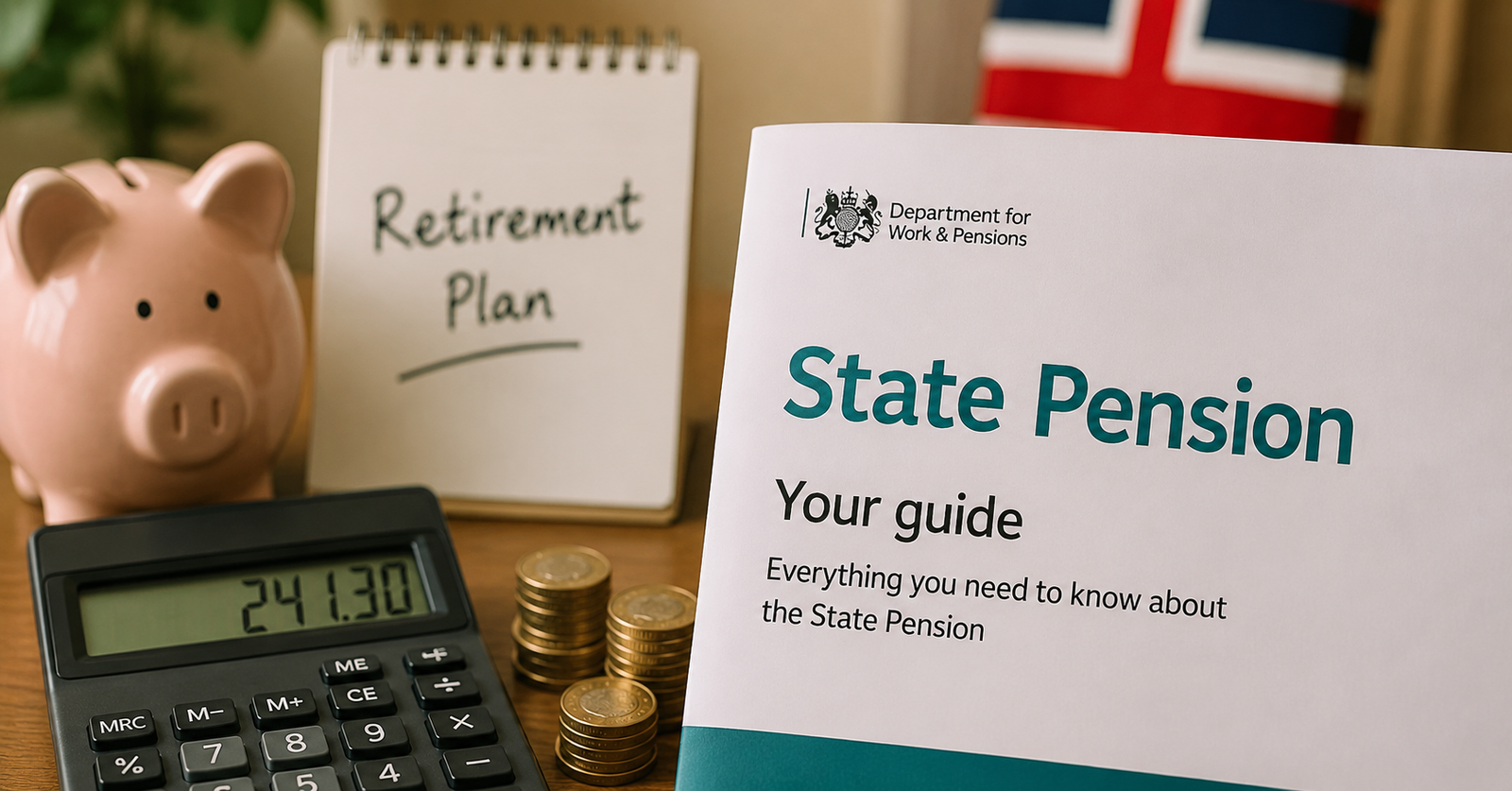
The UK State Pension remains one of the most important sources of retirement income for millions of people. In 2026, changes to pension rates, National Insurance records and State Pension age are particularly relevant as the UK continues the gradual move toward a State Pension age of 67. Understanding how the system works can help people plan their retirement with greater confidence.
The amount someone receives is not automatically the same for everyone. It depends largely on their National Insurance record, when they reach State Pension age and whether they qualify under the older basic State Pension system or the newer State Pension rules. The government has also increased pension payments for the 2026–27 financial year, making the latest figures especially important for anyone approaching retirement.
What Is the UK State Pension?
The UK State Pension is a regular payment provided by the government to people who have reached the qualifying State Pension age and built up enough qualifying years on their National Insurance record.
It is designed to provide a foundation for retirement income rather than replace a person’s entire working salary. Many retirees therefore combine their State Pension with workplace pensions, private pensions, savings or other income.
For people reaching State Pension age on or after 6 April 2016, the new State Pension generally applies. GOV.UK states that people usually need at least 10 qualifying National Insurance years to receive any new State Pension, although the amount depends on their individual record.
How Much Is the UK State Pension in 2026?
The full new State Pension is £241.30 per week for the 2026–27 financial year. This represents an increase from the previous year’s rate and reflects the latest annual uprating.
The government announced that State Pension payments increased by 4.8% from 6 April 2026 under the Triple Lock. The increase applies to both the basic State Pension and the new State Pension.
For someone receiving the full new rate, £241.30 per week works out at approximately £12,547.60 over a full year, before considering tax or other circumstances.
However, receiving the maximum amount is not automatic. A person’s National Insurance history is central to calculating their entitlement, and gaps in the record can affect the final figure.
The Older Basic State Pension
People who reached State Pension age before 6 April 2016 generally fall under the previous system. The full basic State Pension is £184.90 per week in 2026–27. Some people may also receive an Additional State Pension depending on their previous employment and contribution history.
This distinction is important because the phrase “State Pension” can refer to different arrangements depending on a person’s date of birth and when they reached pension age.
How National Insurance Years Affect Your Pension
National Insurance qualifying years are one of the most important factors in determining State Pension entitlement.
A qualifying year can generally be built through employment and National Insurance contributions, National Insurance credits or voluntary contributions. Credits may be available in circumstances such as caring for children, unemployment or certain periods of illness or caring responsibilities.
Under the new State Pension system, 35 qualifying years is commonly associated with receiving the full rate, but this does not mean everyone with exactly 35 years will automatically receive the maximum. Transitional rules and previous National Insurance arrangements can affect an individual’s starting amount.
This is why checking a personal State Pension forecast is much more useful than relying solely on a general calculation.
When Can You Claim the State Pension?
The State Pension cannot normally be claimed simply because someone has stopped working. The earliest point at which it can be received is the individual’s State Pension age.
The State Pension age for men and women is currently moving from 66 to 67 between 2026 and 2028. The exact date depends on a person’s date of birth.
For example, people born during the transition period beginning in April 1960 reach State Pension age at different points between 66 and 67. People born from 6 March 1961 through 5 April 1977 are scheduled to reach State Pension age at 67 under the current timetable.
The government also regularly reviews State Pension age, meaning people planning retirement many years ahead should check the official position rather than assuming today’s rules will remain unchanged.
Can You Receive the State Pension While Still Working?
Yes. Reaching State Pension age does not mean a person must stop working.
There is no compulsory retirement age of 65 in the UK, and people can continue working after reaching State Pension age if they choose. They may also decide to delay claiming their State Pension.
Deferring can increase the eventual payment, although whether it makes financial sense depends on individual circumstances, including health, other retirement income and how long someone expects to receive the pension.
The decision should therefore be considered as part of a broader retirement plan rather than treated as a simple way to increase income.
What Is the Triple Lock?
The Triple Lock is the mechanism used to determine annual increases to the basic and new State Pension.
Under the policy, pension payments are increased by whichever is highest among average earnings growth, inflation as measured by CPI and 2.5%. For the 2026–27 increase, the earnings measure resulted in a 4.8% rise.
The policy has become a major part of the retirement debate because it directly affects the income received by millions of pensioners. It is also important to remember that future increases cannot simply be assumed to match the 2026–27 rate, because the relevant economic figures change from year to year.
What Happens If You Have Gaps in Your National Insurance Record?
A gap in someone’s National Insurance record does not necessarily mean they have permanently lost the opportunity to improve their pension position.
Some people can fill missing years through voluntary National Insurance contributions. However, paying voluntary contributions is not automatically beneficial in every situation. The potential increase in State Pension should be compared with the cost of making the contribution.
People should therefore check their National Insurance record and State Pension forecast before deciding whether to make voluntary payments. Their forecast can show how many qualifying years they have and whether additional years could improve their expected entitlement.
Does the State Pension Get Taxed?
The State Pension is taxable income, although tax is not normally deducted directly from the payment in the same way as it may be from employment income.
HM Revenue and Customs confirms that the State Pension is taxable as pension income.
Whether someone actually pays income tax depends on their total taxable income and available allowances. For retirees with other pensions, employment income, investments or taxable savings, the State Pension can form part of the overall income calculation.
This makes it sensible to consider the tax position when estimating how much retirement income will actually be available to spend.
Why Checking Your Personal Forecast Matters
General State Pension figures are useful, but they cannot tell an individual exactly what they will receive.
Two people of the same age may have different National Insurance histories and therefore different pension forecasts. Previous contracted-out employment, National Insurance credits and transitional arrangements can also affect calculations.
A personal forecast provides a much clearer picture of expected entitlement. It can also help someone decide whether working additional years or investigating voluntary contributions could make a meaningful difference.
Planning Beyond the State Pension
The State Pension should usually be viewed as one part of a wider retirement strategy.
Workplace pensions, personal pensions, savings and investments may provide additional income. For people on lower retirement incomes, Pension Credit and other support may also be relevant.
The most effective approach is to look at expected income and essential spending together. A strong retirement plan is not simply about maximizing the pension figure; it is about understanding whether the combined income is likely to cover everyday costs throughout retirement.
Frequently Asked Questions
What is the full new State Pension in 2026?
The full new State Pension is £241.30 per week for 2026–27. The amount an individual actually receives depends on their National Insurance record and applicable transitional rules.
How many years do I need for the new State Pension?
You usually need at least 10 qualifying National Insurance years to receive any new State Pension. The amount increases according to your qualifying record, with 35 years commonly associated with the full rate under the new system, subject to individual circumstances.
Has State Pension increased in 2026?
Yes. State Pension payments increased by 4.8% from 6 April 2026, in line with the Triple Lock calculation for the 2026–27 year.
Will State Pension age become 67?
The State Pension age is increasing from 66 to 67 between 2026 and 2028. The exact date depends on the individual’s date of birth.
Can I get my State Pension before State Pension age?
Normally, no. The State Pension cannot usually be claimed early simply because someone has retired from work. The earliest claim point is their State Pension age.
Conclusion
The UK State Pension continues to provide a vital foundation for retirement income, but the amount people receive depends on their individual circumstances. The 2026–27 full new State Pension rate of £241.30 per week represents an important increase, while the gradual rise in State Pension age to 67 is equally significant for future retirees.
Understanding National Insurance qualifying years, checking a personal forecast and considering other sources of retirement income can make pension planning much clearer. Rather than relying on a headline figure, people approaching retirement should look at their own record and circumstances to understand what they are likely to receive.
With pension rules, rates and retirement ages subject to change, keeping personal information up to date is one of the simplest ways to make better-informed decisions about the years ahead.