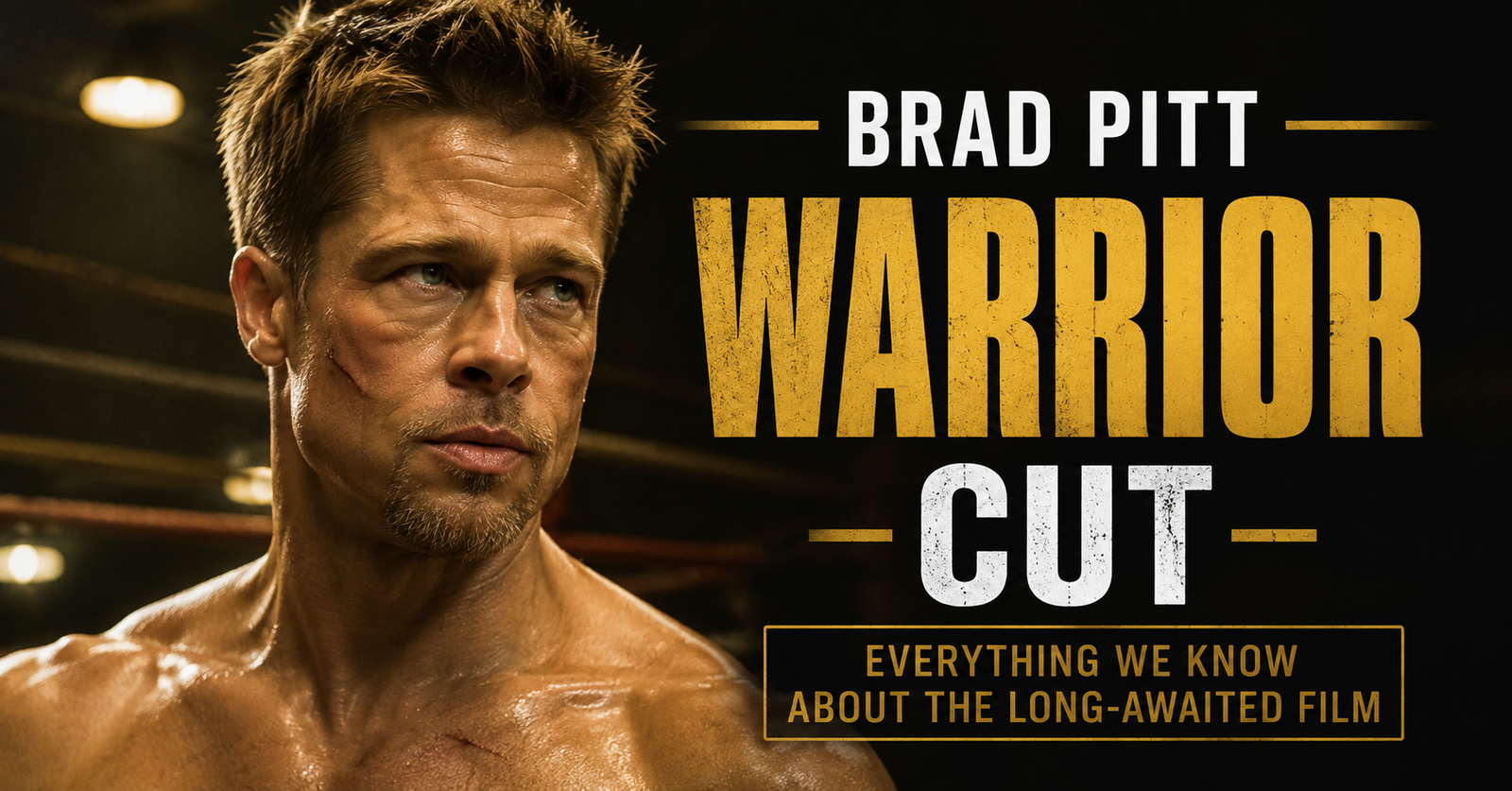
Brad Pitt has worn countless memorable hairstyles throughout his career, but the Brad Pitt warrior cut remains one of the most recognizable. Often associated with his rebellious appearance in Fight Club, the style combines textured length, natural movement, and a deliberately rugged finish. Its appeal comes from looking effortless rather than overly polished, which is why the haircut continues to inspire men decades after the film’s release.
What Is the Brad Pitt Warrior Cut?
The term “warrior cut” is not an official barbering name for one standardized hairstyle. It is commonly used online to describe the rugged, textured look associated with Pitt, particularly his Tyler Durden hairstyle in Fight Club. Hair enthusiasts often interpret the style as a longer, textured version of a classic men’s cut, with enough length around the sides and back to create movement.
The important feature is texture. Instead of creating perfectly smooth lines or an extremely sharp fade, the style relies on layered, slightly messy hair. The top has enough length to stand away from the head naturally, while the sides and back retain visible fullness. This gives the haircut its rough, rebellious character.
That distinction matters because Pitt has worn several hairstyles that could be described as “warrior-inspired.” His appearance as Achilles in Troy featured long blonde hair, while his Don “Wardaddy” Collier style in Fury was a dramatically different military-inspired undercut.
The Fight Club Connection
When people search for the Brad Pitt warrior cut, Fight Club is usually the strongest reference point. Released in 1999, the film gave Pitt one of his most influential appearances, with Tyler Durden’s clothing, attitude, physique, and hairstyle becoming closely associated with late-1990s men’s fashion.
The hairstyle worked because it did not look excessively styled. The hair appeared textured and imperfect, creating a carefree appearance that matched the character’s rebellious personality. Rather than looking like a formal salon haircut, it had the feeling of hair that could be shaped quickly with the fingers.
Modern descriptions of the style commonly emphasize a textured top, additional length around the sides and back, and a messy finish. However, exact measurements vary because the original screen hairstyle was styled according to Pitt’s hair and the character’s overall appearance rather than designed as a universal haircut template.
Why the Style Still Looks Modern
One reason this haircut continues to attract attention is its flexibility. Men’s hairstyles frequently move between extremely short fades and longer, natural cuts, but textured styles tend to survive those trend cycles because they do not depend on one precise shape.
The Brad Pitt warrior cut also creates a balance between controlled and relaxed styling. The hair has enough structure to look intentional, yet the uneven texture prevents it from appearing too formal.
This makes the look particularly appealing to men who want something masculine without having a heavily sculpted haircut. It can work with casual clothing, denim, leather jackets, smart-casual outfits, and even more contemporary fashion.
How to Ask a Barber for the Look
The easiest way to explain this hairstyle to a barber is to bring a clear photograph rather than relying only on the phrase “warrior cut.” The term can mean different things to different barbers, so a reference photo helps establish the desired length and texture.
Ask for a textured, medium-length men’s cut with natural movement. The top should remain long enough to create separation and volume, while the sides and back should not automatically be taken down to skin.
A barber can then adjust the proportions according to your face shape, hair density, and natural growth pattern. Professional styling advice is especially important because the same haircut can look dramatically different on thick, fine, straight, wavy, or curly hair.
Hair Type Makes a Difference
Pitt’s hairstyles often benefit from naturally manageable hair, but you do not need exactly the same hair type to create a similar impression. What matters is how the haircut is adapted.
Thicker hair can provide excellent natural texture and volume. Fine hair may require careful layering so it does not become too flat. Wavy hair can actually work well because natural bends create the loose movement associated with the style.
Very curly hair can also be adapted, although the result will naturally look different from Pitt’s straighter texture. A good barber should work with the hair’s natural pattern instead of trying to force it into an unrealistic shape.
Styling the Warrior Look
The styling process should remain relatively simple. Start with clean, towel-dried hair and use a lightweight texturizing product. A small amount of matte clay, styling cream, or texture paste can help separate individual sections without making the hair look greasy.
Use your fingers rather than creating an overly precise combed finish. Push the top into place and allow some strands to remain slightly irregular. The goal is controlled texture rather than perfect symmetry.
For extra volume, blow-drying the hair while lifting it with the fingers can help. Once the hair has the desired shape, a small amount of product can be applied to the ends. Too much product can make the hairstyle heavy and destroy the loose appearance that makes the cut attractive.
How It Differs From Brad Pitt’s Fury Haircut
It is important not to confuse the Brad Pitt warrior cut with his famous Fury hairstyle. In Fury, Pitt played tank commander Don “Wardaddy” Collier, and his haircut was much shorter on the sides with noticeably longer hair on top. It is generally described as a disconnected or military-inspired undercut.
GQ’s 2014 breakdown described Pitt’s Fury hairstyle as having closely shaved sides, longer hair at the crown, and a softer treatment toward the back. The top was designed to be brushed backward, creating a strong pompadour-like silhouette.
The warrior style associated with Fight Club, by comparison, is much more relaxed and textured. Understanding this difference can prevent confusion when communicating with a barber.
Face Shapes That Suit the Style
A textured medium-length haircut can be adapted to many face shapes. For an oval face, the style can generally be worn with relatively balanced proportions. A square face can benefit from the softer texture because it can reduce the appearance of overly sharp angles.
For a rounder face, adding some height through the top can create a more elongated appearance. Longer faces may benefit from keeping additional fullness around the sides rather than creating excessive height.
The most important factor is proportion. Copying a celebrity haircut exactly is not always the best approach because Pitt’s facial structure, hair density, and styling are unique to him.
Why Brad Pitt’s Hair Remains Influential
Pitt’s influence on men’s grooming extends far beyond one movie. Over the years, he has moved between long blonde hair, shorter classic cuts, textured styles, buzz cuts, and highly structured character hairstyles. His 2000s looks, including his shorter hair around Mr. & Mrs. Smith, have also remained recognizable.
That variety demonstrates why his hairstyles continue to attract attention. Rather than relying on one signature haircut, Pitt has repeatedly changed his appearance to match characters, eras, and personal style.
The current popularity of textured “warrior” hairstyles reflects the same idea: men increasingly want hair that looks natural, individual, and easy to adapt rather than excessively engineered.
Is the Warrior Cut Easy to Maintain?
Maintenance depends on the length you choose. The more textured and natural the style, the less important it is to maintain perfectly sharp edges. However, regular trims are still useful for controlling the shape and preventing the sides and back from becoming unbalanced.
Styling may take only a few minutes once the haircut has been properly shaped. The biggest challenge is preserving enough length while preventing the hair from becoming bulky or shapeless.
A barber can usually recommend a trimming schedule based on how quickly your hair grows and how closely you want to reproduce the reference style.
Frequently Asked Questions
What is the Brad Pitt warrior cut?
It is an informal term commonly used for the rugged, textured hairstyle associated with Brad Pitt’s Tyler Durden appearance in Fight Club. It generally features medium-length, layered hair with natural movement and a deliberately imperfect finish.
Is the warrior cut the same as the Fury haircut?
No. Pitt’s Fury hairstyle was a much shorter military-inspired undercut with closely shaved sides and a longer slicked-back top. The Fight Club look is softer, longer, and more naturally textured.
Can anyone get this hairstyle?
Most men can adapt the concept, but the final appearance depends on hair texture, density, face shape, and natural growth patterns. A barber can modify the length and layering to suit individual features.
What should I tell my barber?
Instead of simply saying “warrior cut,” show a photograph of the Brad Pitt hairstyle you want. Ask for a textured medium-length cut with natural movement and enough length around the sides and back to create the desired rugged appearance.
Final Thoughts
The Brad Pitt warrior cut remains popular because it represents more than a celebrity hairstyle. Its textured finish, natural movement, and slightly rebellious character give it an enduring quality that does not depend entirely on passing trends. Although the name “warrior cut” is an informal modern description rather than an official haircut category, the inspiration behind it is clear.
For anyone considering the look, the best approach is not to copy every strand of Pitt’s hair. Instead, use the style as inspiration and let a skilled barber adapt the length, texture, and proportions to your own hair and face. That is what turns a famous movie hairstyle into a practical, confident everyday look.