Introduction
Car Dealership with Hearing Loop in customer service is no longer just a “nice-to-have”—it’s a core expectation. Modern businesses are increasingly recognizing that inclusivity directly impacts customer satisfaction, trust, and long-term loyalty. One of the most overlooked yet highly effective accessibility solutions in public-facing environments like Car Dealership with Hearing Loop is the hearing loop system.
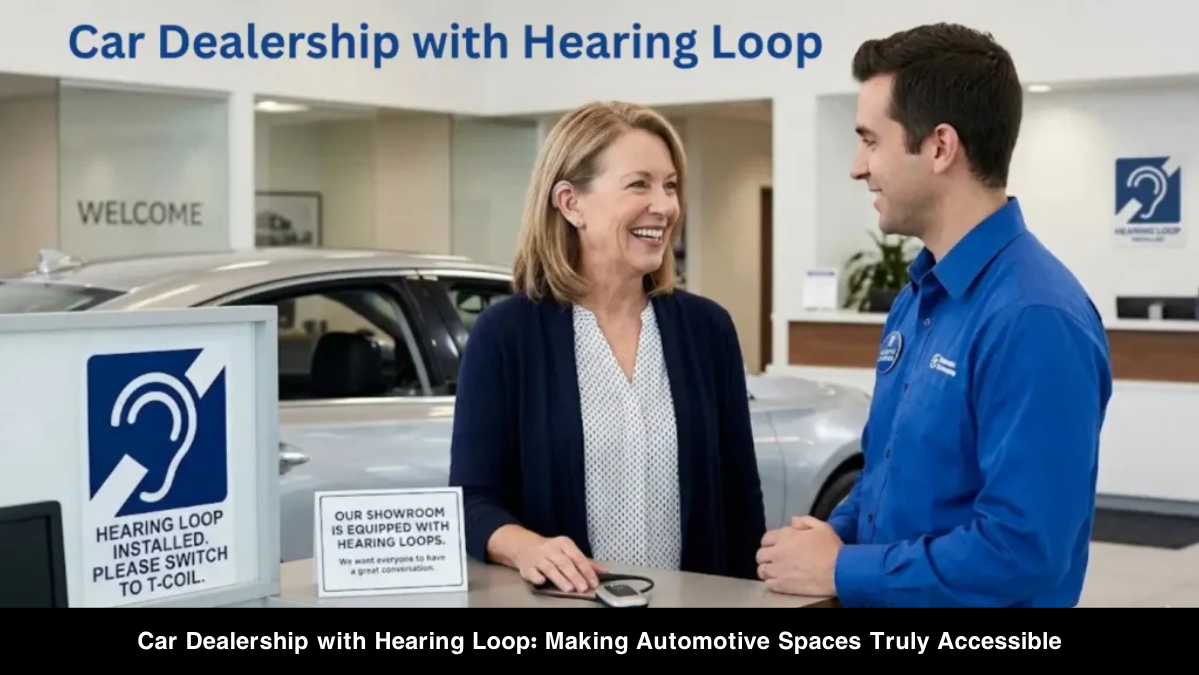
A Car Dealership with Hearing Loop with a hearing loop creates a more welcoming environment for customers with hearing loss by improving clarity in communication. Since buying a vehicle involves detailed conversations, negotiations, and technical explanations, clear audio understanding becomes essential.
In this article, we’ll explore what hearing loops are, why they matter specifically in Car Dealership with Hearing Loop, and how they transform the customer experience from both a practical and emotional standpoint.
What is a Hearing Loop and Why It Matters in Car Dealership with Hearing Loop
A hearing loop, also known as an induction loop system, is a type of assistive listening technology that transmits sound directly to a hearing aid or cochlear implant. Instead of relying on ambient sound, it delivers clear, direct audio through a magnetic signal. This significantly reduces background noise interference, which is common in busy environments like showrooms.
In a Car Dealership with Hearing Loop setting, this technology becomes especially valuable. Showrooms are often filled with conversations, music, vehicle demonstrations, and general activity. For someone with hearing loss, this environment can make understanding a salesperson extremely difficult, even with a hearing aid. A hearing loop removes much of that struggle.
Another important aspect is that car purchasing is a detail-heavy process. Customers need to understand financing options, warranty terms, technical specifications, and service plans. Miscommunication in any of these areas can lead to confusion or even mistrust. A hearing loop ensures that customers receive information clearly and accurately, without repeatedly asking for clarification.
Ultimately, installing a hearing loop is about more than technology—it’s about ensuring equal access to information. In a Car Dealership with Hearing Loop, where decisions often involve significant financial commitment, this level of clarity is not just helpful but essential.
How Car Dealership with Hearing Loop Benefit from Installing Hearing Loops
One of the most immediate benefits for dealerships is improved communication efficiency. Sales staff no longer need to repeat information multiple times or raise their voices in noisy environments. Instead, conversations flow more naturally, making interactions smoother and more professional.
Another key advantage is customer inclusivity. When a dealership installs a hearing loop, it sends a strong message that every customer matters, regardless of their hearing ability. This builds trust and strengthens the dealership’s reputation as an inclusive and forward-thinking business. In a competitive market, this perception can make a meaningful difference.
There’s also a direct impact on sales performance. When customers fully understand what is being explained—whether it’s financing details or vehicle features—they are more confident in making purchasing decisions. Reduced misunderstandings mean fewer hesitations and a more positive buying experience overall.
Finally, hearing loops can reduce staff stress. Sales teams often face communication challenges without realizing that the issue lies in sound accessibility. With a loop system in place, employees can focus more on building relationships and closing deals rather than constantly adjusting how they communicate.
Customer Experience and Accessibility Advantages
From a customer’s perspective, walking into a dealership can already feel overwhelming. There are multiple vehicles, pricing options, and technical details to consider. For someone with hearing loss, this experience can become even more stressful if communication barriers are present. A hearing loop changes that dynamic significantly.
Instead of struggling to hear in a noisy showroom, customers receive clear, direct sound through their hearing devices. This allows them to engage fully in conversations without feeling left out or dependent on repetition. It creates a sense of independence and confidence during the decision-making process.
Another major advantage is emotional comfort. Many individuals with hearing impairment often avoid situations where communication might be difficult. When they know a dealership is equipped with a hearing loop, it reduces anxiety and encourages them to engage more openly. This emotional reassurance plays a huge role in customer satisfaction.
Additionally, accessibility improvements like hearing loops often enhance the overall environment for all customers—not just those with hearing loss. Clearer communication benefits everyone in a busy setting, making discussions more efficient and reducing misunderstandings across the board.
Implementation and Considerations for Dealerships
Installing a hearing loop system in a Car Dealership with Hearing Loop is relatively straightforward, but it does require careful planning. The first step is identifying key areas where communication is most important, such as sales desks, finance offices, and customer consultation spaces.
Once the areas are selected, professional installation ensures that the loop is properly calibrated. The system must be tuned to avoid interference and provide consistent sound coverage throughout the designated space. Poor installation can reduce effectiveness, so expertise is crucial.
Training staff is another important consideration. Employees should understand how the system works and be able to inform customers about its availability. A hearing loop is most effective when customers know it exists and feel comfortable using it.
Maintenance is generally minimal, but periodic checks ensure that the system continues to function properly. Dealerships should also consider combining hearing loops with other accessibility tools, such as visual aids or captioning systems, to create a fully inclusive environment.
The Future of Accessible Automotive Retail
As customer expectations continue to evolve, accessibility will become an even more important part of the automotive retail experience. Hearing loops are just one example of how technology can bridge communication gaps and improve service quality.
In the future, we can expect dealerships to adopt a broader range of inclusive technologies, including real-time transcription tools and enhanced digital communication systems. However, hearing loops will likely remain a foundational solution due to their simplicity, reliability, and effectiveness.
Car Dealership with Hearing Loop that invest early in accessibility features position themselves as leaders in customer care. They not only comply with accessibility standards but also actively create environments where every customer feels respected and understood.
In the end, a car dealership with a hearing loop is not just about technology—it’s about building a better, more human experience for everyone who walks through the door.